Friday, November 25, 2011
Skeeter's getting a new website!
Tuesday, November 15, 2011
Blog Neglect
Tuesday, September 27, 2011
The Quintissential Comfort Food: Seasonal Soups
Being a follower of some celebrity chefs (not to name names ; ) I have learned many techniques for soups, full of seasonal produce, and packed full of flavor and nutrition. Here are some ideas to get you going a bit in the kitchen this fall and winter season, and if you are a new soup maker, try to notice the pattern of building flavor as you go along. Then be adventurous to try more new veggies whenever you want. I have had a blast! Does anyone out there have more new ideas? Please share on our facebook page, or email us with your great recipe!
Creamy Acorn Squash Soup
1 onion, or leek, diced
1 tbsp of dried rosemary
1 bay leaf
4 cups water
2 garlic cloves, minced
1 acorn squash, peeled and chopped into large chunks
1/4 c heavy cream
salt and pepper to taste
olive oil
Heat olive oil on medium heat, and add onion, garlic and herbs. Pan fry until translucent. Add squash, and water, and cook until squash is soft. Remove bay leaf, and puree in a food procesor until smooth. Put soup back into a pot on the stove and add cream, and season with salt and pepper to taste.
Comfy Tomato and Bean Soup
1 c. cooked, or canned beans
olive oil
1 onion, cubed
1 pepper, cubed
1 sprig thyme
1 can diced tomatoes, or 4 large fresh ones, diced
1/4 c. parmesan cheese
salt and pepper to taste
Sautee onion and olive oil until translucent. Add beans, and squash with a fork until 1/2 the beans are crushed. Add thyme, pepper, tomatoes and 1/2 water and cook on medium for 20 minutes. Add 1/4 c of grated parmesan cheese, salt and pepper to taste. Add additional water if too thick.
Zingy Spinach and Broccoli Soup
1 broccoli head, washed and chopped
2 c. spinach
2 c. stock, veggie, or chicken
1/4 c. white wine
1 onion chopped
2 tbsp. dill, chopped
olive oil
salt and pepper to taste
Sautee onion in olive oil until translucent. Add broccoli and cook for 5 minutes, and add stock, white wine and continue to cook until broccoli is soft. Add dill and spinach. Cool for 10 minutes. Add to food processor and blend until smooth. Return to pot, and season with salt and pepper.
Monday, August 29, 2011
It's all about Food Preservation
Monday, August 15, 2011
How to Eat Like a Veggie Farmer
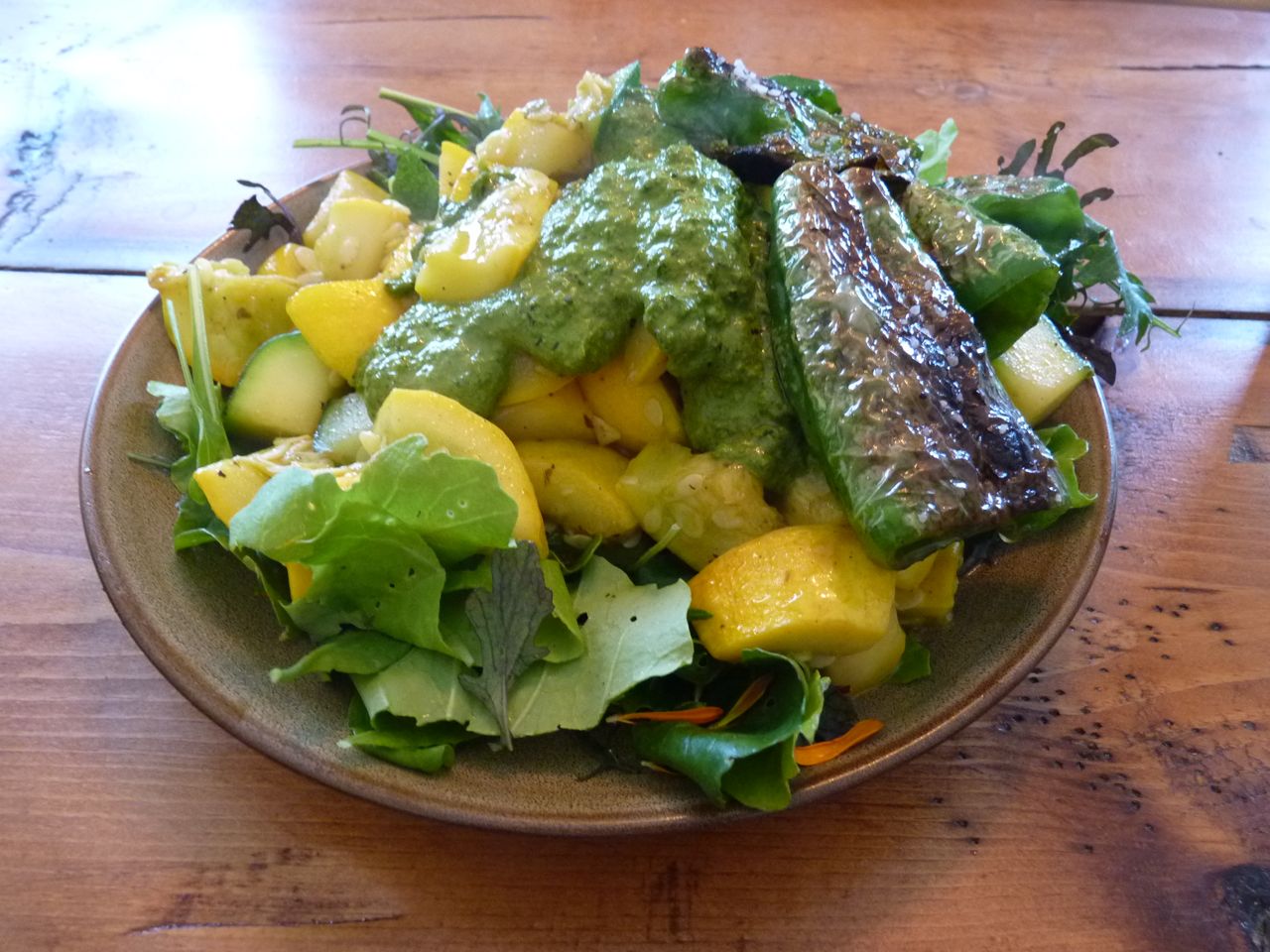
As the meals have become more and more delicious, elaborate and fantastic I started to think about how our eating habits have changed since we started farming. Frequent trips to the grocery store are no more! We eat what we have, and make meals so good they would knock your socks off. These photos hopefully share a little insight into the world of seasonal meals that we Skeeter Farmers have come to enjoy.
There is nothing more amazing than an at home, mid-work week lunch (major perk to farming). Here we made fresh kale/basil pesto pasta. Topped off with a homebrew porter.
Just another pretty bouquet of flowers to make me happy while working on the master's thesis. These flowers were grown specifically for a wedding in August. We are happy to have the leftovers :)
Thursday, August 4, 2011
Pickling Cukes are Ready!
Oodles of Zucchini!
Wednesday, July 20, 2011
Waging War on the Wireworm
Tuesday, July 12, 2011
Our first CSA is on it's way!
Friday, July 8, 2011
The Lettuce of Skeeter Farm
Wednesday, July 6, 2011
Living in an Amish Paradise
Weeding is possibly the most time intensive activity on the farm. It has usually included an upright hoe, or being down on your hands and knees pulling things out by hand and shuffling along the 100 foot rows. The Wheel Hoe (yes, it deserves capitals) is about ten times as efficient. Ten. Times. As. Efficient.
Thursday, June 23, 2011
Experimenting with Mulches
A mulch around the surface of your crop can serve multiple purposes - yes it helps to keep weeds down, but it can also help to regulate soil moisture and soil temperatures, provide a nice environment for soil organisms and depending on the mulch you use, can add organic matter to your soil once turned down (all good news for a veggie farmer).
Around Skeeter Farm we are using four different mulches, each in small quantities. I imagine that if we have good results with any one, we'll go ahead and use it more widespread next year.
Duck compost, which we are very fortunate to have access to from FVDG, is made up of the composted duck manure and wood shavings that the ducks are grown on.

Black plastic mulch is good for warming the soil (something that melons love) but isn't exactly great for the environment as it probably takes thousands of years to decompose. We limit our use of the stuff.

Straw is something that we have used as a mulch around our garlic to keep it from experiencing the extreme winter temperatures that we can get in the valley.

Something new this year is the use of sheep's wool as a mulch. We were fortunate to have some given to us and we are experimenting with using it as a mulch around some flowers. It looks beautiful and smells delightfully sheepy!
Monday, June 13, 2011
Skeeter Open House - June 18th
Monday, May 30, 2011
Yikes. It's a good thing we aren't squeamish.
Sunday, May 22, 2011
A Lovely Spring Recipie
Creamy Asparagus Soup
2 1lbs asparagus chopped
1 large onion chopped
a pat of butter
5 c vegetable broth
2 sprigs fresh thyme
1/3 c heavy cream
juice of 1/2 lemon
salt and pepper
Cook onion with butter, salt and pepper until translucent. Add asparagus and thyme and sauteed until tender. Add broth and continue to cook for about 5-10 mins. Puree soup with a food processor, put back on heat and add cream and juice of 1/2 lemon. Season further to taste.
Enjoy!!
Recipes concerning Skeeter Farm veggies are on the horizon. Stay tuned for some additional ideas......
Friday, May 13, 2011
A Reason to Farm
I think everyone has their own particular reasons for choosing farming as a career, or hobby, but my reason to get involved in this local farming venture is because of the food. A simple statement to be sure, but the food is more that just eating the fresh peas from the field. It is, for me, the pride and joy of growing something yourself that tastes absolutley fantastic and healthy. The tomatoes are not imported from Florida, and the kale is not from California. The real flavor and taste is natural and explosive, not bland and unripe. The act of eating in season and local is affordable, challenges the creative palate, and when fresh out of the field you know it has all the nutrients.
In addition, the act of supporting local farmers is truly a great thing for the community. Like people supporting Skeeter Farm, I like to support other local farmers. It keeps people working and food accessible.
Tuesday, May 3, 2011
Lil Farm Update
Setting up the farm
The first season farming at a new site is special because we essentially get to design our farm. What does that mean? Well we design and set up our irrigation, design our field and planting beds, create a crop rotation and figure out where other important farm infrastructure like our washing station will go. It is a season to be creative and it is also a season of hard work because all of the set up happens at the same time as planting.
These times are not without their challenges…
Take, for example, the set up of our hoophouse, which spanned over a couple of months and involved several days of hard work (okay so the boys worked really hard…we just worked hard). The final step was to put on the brand new plastic, which we decided to do in a bit of a storm the day before Amy went on a week-long trip. We were so excited to finally have the hoophouse done and to get our light starved transplants out in the sunlight. Well…just hours after we finished the plastic, the wind kicked up, and needless to say our brand new plastic tore and was flapping madly in the wind. Guess we should have spent some more time making sure it was secure…
(Thanks to Joe for the somewhat heartbreaking photo).
Despite hard work there are several things that we are extremely excited about.
One thing is the new irrigation/water system. Those of you who have been with us for a while may have heard about our water set up at the old farm. The old system involved us dragging a 60 lb gas water pump up and down a steep embankment every time we wanted to turn water on. This often was done in office work clothes in the early hours of the morning. Get this…the new system can be turned on in a heartbeat by merely flipping on a valve. Amazing eh?
Another thing that is really quite exciting to us is the fact that our field is a regular shape (cheap thrills). Seems simple, but after farming in an oval shaped field that was shaded on one side, the new field is a dream come true. With a regular shaped field that is not shaded, we have planned out a 6-year crop rotation based on 6 separate planting beds. What this means is that every 6th year, the same crop family will be planted in the same area. Crop rotation is a critical aspect of managing pests and diseases as well as maintaining high quality soil for our style of farming.
]Speaking of soil, our little tractor, Benny, is having a much better time tilling up this nice sandy soil compared to the heavy clay we have farmed in the past. With only 12.5 horsepower, we were quite underpowered and had a very hard time doing our field preparations. Field prep has gone much more smoothly this year thanks to the big tractors from Fraser Valley Duck and Goose and our little Benny.
Sunday, May 1, 2011
Another nice blog post about Skeeter Farm!
We've been so busy in the field lately, there's almost no time to spend on the computer (and I am not complaining at all).
Aimee and Mykol, two classmates of mine, came out to the farm at the end of the season last year to help with our last harvest - thanks friends!
Aimee, 6 months later, posted a nice story and pics of us:
http://abrisebois.blogspot.com/2011/04/scooting-around-skeeter-farm-and-kick.html
Monday, April 18, 2011
Nice plug from a CSA customer.
http://www.strocel.com/talking-to-a-small-farmer/
Thanks Amber!
Wednesday, April 13, 2011
The farm - our other, needier, life partner.
These are challenges that are certainly present for new farmers, but in our case, have been relatively easily overcome. They are challenges that you can do something about....like take the steps to gain the knowledge you need to confidently plant a seed in the ground and take it all the way to market. Accessing land and equipment, well, yes it is a challenge if you don't know where to go to find it, but in our experience there is no lack of people willing to help a new farmer out. So if those aren't the biggest challenges...than what is it?
For us, it is time. Hands down.
Time is what limits our ability to do the things we do, restricts how much we can take on as farmers as we dream of bigger and better things, meddles with our ability to have a normal social life, be spontaneous, and spend time with the people we want to spend time with.
When we started out farming, we made the decision to do so on a "part-time" basis. By this I mean that we decided to not quit our day jobs (part-time in quotations as 50 hrs/week on the farm has not been uncommon). In a lot of ways, this was the right thing for us to do. For one, starting a farm while continuing to work another job has allowed us to alleviate the risk involved with taking the plunge into farming by continuing to receive a steady income while we learn how to farm and be profitable. We have relied on our own incomes (i.e. no loans or outside sources of funding) to get our farm going, and it feels good knowing that we don't owe any money.
On the other hand, not fully taking the plunge has resulted in a crazy last few years and some frustrations with not having the time to do things carefully, and in the way we want to. We feel like we are always playing catch up....and it's pretty clear to me that this means of farming will not be something we will be able to continue into the future. At some point there will need to be a decision made: grow vegetables full time and really make a go at it OR settle for farming as part of a lifestyle and not a means of income.
Reading back through this post (which I started to write back in March and never really got to it)...this is sounding complain-y, which is not what my intent was at all. The intent was to shed light on an important decision that all new farmers face - start slow and build up the business while supporting yourself elsewhere, or jump in feet first, take on the risk but have time to make your farming dreams come true. This is a decision that we have struggled with, and still do. Finding the balance between achieving our business goals and maintaining our other life commitments seems to be a perpetually moving target.